Pest dossier · Arachnids
Striped bark scorpions
A night-active shelter suspect. Inspect gaps, stored wood and hot-attic entry routes.
Last updated October 3, 2026
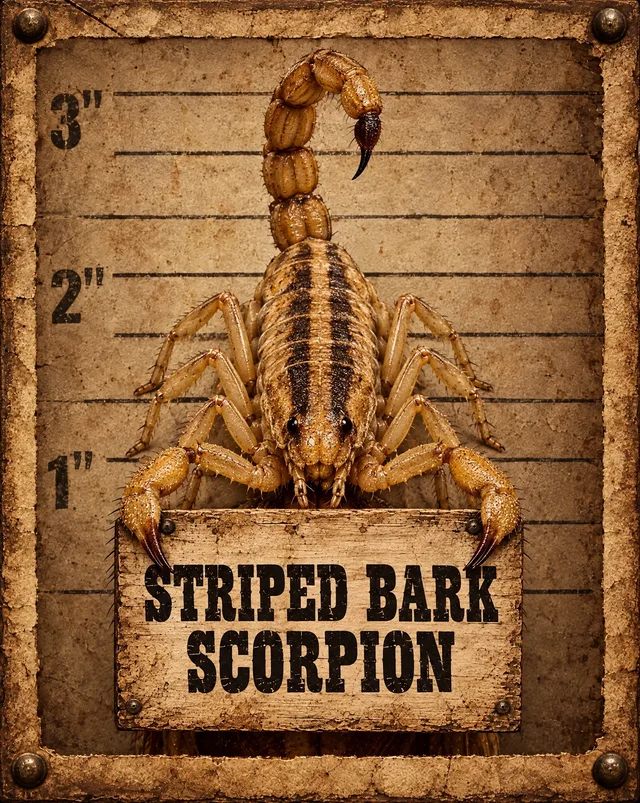
Striped bark scorpion prevention starts with reducing nearby shelter and closing entry routes. Insecticides alone are difficult to rely on, so inspect the attic, doors and outdoor storage before selecting a treatment.
Know the suspect
Striped bark scorpions are yellowish tan, usually with two dark stripes down the back and a dark triangular mark on the front of the head. Adults are about 2 1/2 inches long, with slender pincers and a long tail ending in a stinger. They are arachnids, not insects. Around DFW homes, inspect loose boards, firewood, walls and attic routes; scorpions can climb. Tree branches, cracks, doors and stored wood can bring access or contact. Texas A&M scorpion identification guide
The wanted portrait is a stylized AI illustration, not an identification photograph. Compare the actual animal and its markings with an Extension identification guide.
What they can do
They sting when disturbed. Texas scorpion stings usually cause moderate reactions, but severity varies and allergic reactions are possible. Their presence does not establish disease transmission or predict an individual's reaction. Do not handle one to test whether it will sting. Extension sting guidance Extension biting and stinging overview
Start with control, not a spray
- Reduce loose boards, stones, logs and debris near the house.
- Keep grass short and trim branches away from the structure.
- Inspect firewood before moving it; do not store it indoors.
- Repair weatherstripping and damaged screens.
- Inspect weep holes and suitable pipe, eave and door gaps; use appropriate screening or sealing while preserving necessary drainage and ventilation.
- Inspect shoes and stored items carefully before use, without reaching into hidden spaces.
Scorpions hunt at night and shelter in narrow spaces during the day. Reducing shelter and insect prey supports prevention, but repeated indoor sightings call for an inspection of the access routes rather than a spray-only response. Texas A&M guidance
Chemicals you may encounter
Extension names permethrin, cyfluthrin and bifenthrin among scorpion-control ingredients. These are examples, not a recommendation to spray every surface or use an outdoor product indoors. Natural oils are not automatically harmless and may have short residual activity. Ingredient choice cannot replace exclusion, correct formulation or label-compliant placement. Extension control limits
The label is the law. Use a product labeled for the actual pest and location, and follow its directions for placement, amounts, protective equipment and re-entry. Keep products and treated areas away from children and pets as the label directs. Never use an outdoor-only pesticide indoors or assume more product works better. EPA pesticide safety
Seasonal watch
Use hot North Texas weather as a prompt to inspect attic access and living-area entry points. Extension notes scorpions may move from hot attics into living areas. Also inspect stored materials whenever handling them; neither cool weather nor daylight makes hidden scorpions safe to touch. Texas A&M guidance
When to get help
A qualified, licensed pest professional is warranted for repeated indoor activity or inaccessible shelter. Watch a stung person for adverse reactions. Persistent pain or swelling warrants medical attention; breathing difficulty or a serious allergic reaction requires emergency care. Do not use this guide to judge an individual sting's severity. Texas A&M guidance
This field guide is educational and does not offer treatment bookings.
Common treatments
Seal entry points, reduce clutter and manage insect prey first. Extension lists these ingredients among scorpion-control examples. Product formulation and placement matter, and an outdoor treatment is not permission for indoor use. Natural oils are not automatically harmless and may have short residual activity. Continued indoor sightings warrant a qualified inspection.
Ingredient references
These are examples discussed in pest guidance, not a shopping list. The exact product label must cover the pest, location and use. An ingredient name alone does not establish suitability or Texas registration.
Read the pesticide-label guide or browse the treatment catalog.
Common questions
Are striped bark scorpions insects?
No. They are arachnids, with slender pincers and a long tail ending in a stinger.
Why check attic access in hot weather?
Extension notes scorpions may move from hot attics into living areas.
Are insecticides enough?
Insecticides alone are difficult to rely on. Shelter reduction, exclusion and correctly labeled placement remain important.
Field notes on this suspect
- Field notes · SeasonalA weather-dependent, season-by-season guide to the pests North Texas homeowners commonly see, with what to watch and what to do.
- Field notes · PreventionStriped bark scorpions climb, hide in cracks and follow insects indoors. Sealing doors, weep holes and gaps keeps most of them out.
Related suspects
- ArachnidsA quiet storage suspect. Reduce contact risk, confirm the spider and inspect undisturbed spaces.
- ArachnidsA sheltered-web suspect. Inspect woodpiles and garage corners without touching the spider.
- ArachnidsA blood-feeding suspect. Check pets and outdoor clothing, then reduce sheltered habitat.