Field notes · Prevention
Why scorpions get into North Texas homes, and how to seal them out
Striped bark scorpions climb, hide in cracks and follow insects indoors. Sealing doors, weep holes and gaps keeps most of them out.
Updated October 3, 2026 · 6 min read
The short version
- The striped bark scorpion is the most common scorpion in Texas and the only one found statewide.
- Striped bark scorpions climb walls and trees and are often found in attics.
- Most scorpions get in through gaps under exterior doors, so door sweeps and thresholds come first.
- Weep holes should be screened with mesh rather than sealed shut.
- Outdoor lights attract insects, which in turn give scorpions a steady food supply.
- Texas A&M says scorpions are difficult to control with insecticides alone.
Striped bark scorpions get into North Texas homes because they climb, hide in tight cracks, and follow shelter and food, and hot weather can drive them from attics into living areas. The most reliable way to keep them out is to seal gaps under doors, around windows and at utility penetrations, and to clear the debris and bright lighting that draw them close. Insecticides alone are difficult to rely on.
Know the suspect: which scorpion lives in North Texas homes?
The striped bark scorpion (Centruroides vittatus). Texas A&M AgriLife calls it the most common species in Texas and the only one found throughout the state. Adults are about 2 1/2 inches long and yellowish tan, with two broad dark stripes running down the back, a dark triangular mark on the front of the head, slender pincers and a long, slender tail.
Scorpions are arachnids, relatives of spiders, ticks and mites, not insects. That matters for prevention. They don't feed on crumbs or garbage the way roaches and ants do; they hunt. Texas A&M lists their chief foods as small insects, spiders, centipedes, earthworms and other scorpions.
A note on our pictures: the mugshots on this site are AI illustrations, not identification photographs. See the striped bark scorpion profile for more on the suspect.
Why do scorpions come inside North Texas homes?
Several traits of this species line up neatly with how homes are built.
They hide in tight spaces. Scorpions are nocturnal, hiding during the day and coming out at night. Their flat bodies let them hide in small cracks and under stones, bark, wood and other objects. A gap under a door or around a pipe can look like a perfect daytime hideout.
They climb. Unlike many scorpions, the striped bark scorpion does not burrow. Texas A&M notes that it is common for this scorpion to climb trees and walls, and they often are found in attics. Overhanging branches can give them a path to the roof.
They escape the heat. During hot weather, scorpions in attics may move into living areas to escape the high temperatures. Texas A&M AgriLife has also reported that in hot, dry summers scorpions head indoors looking for cooler conditions and water.
They follow the food. Texas A&M's school IPM program notes that nighttime lighting around buildings attracts large numbers of flying insects, which can provide a steady food supply for scorpions.
They like clutter. Striped bark scorpions are associated with dead vegetation, fallen logs and human dwellings and are often found under rocks, boards and debris. A woodpile against the house is an open invitation.
Where do scorpions get in?
Texas A&M's bark scorpion IPM plan notes that most scorpions gain access through gaps under exterior doors. The plan was written for schools, but the same entry points exist in houses. Other common routes include:
- Gaps under and around exterior doors, including the garage door.
- Loose-fitting windows and torn or poorly fitted screens.
- Weep holes in brick or stone veneer.
- Gaps around pipes, wires and other utility penetrations.
- Cracks along roof eaves and flashing.
- Tree branches touching the roof, which lead to the attic.
Close the gate: how do you seal scorpions out?
Exclusion is the backbone of scorpion prevention. Texas A&M recommends these steps, and together they cover most of the routes listed above.
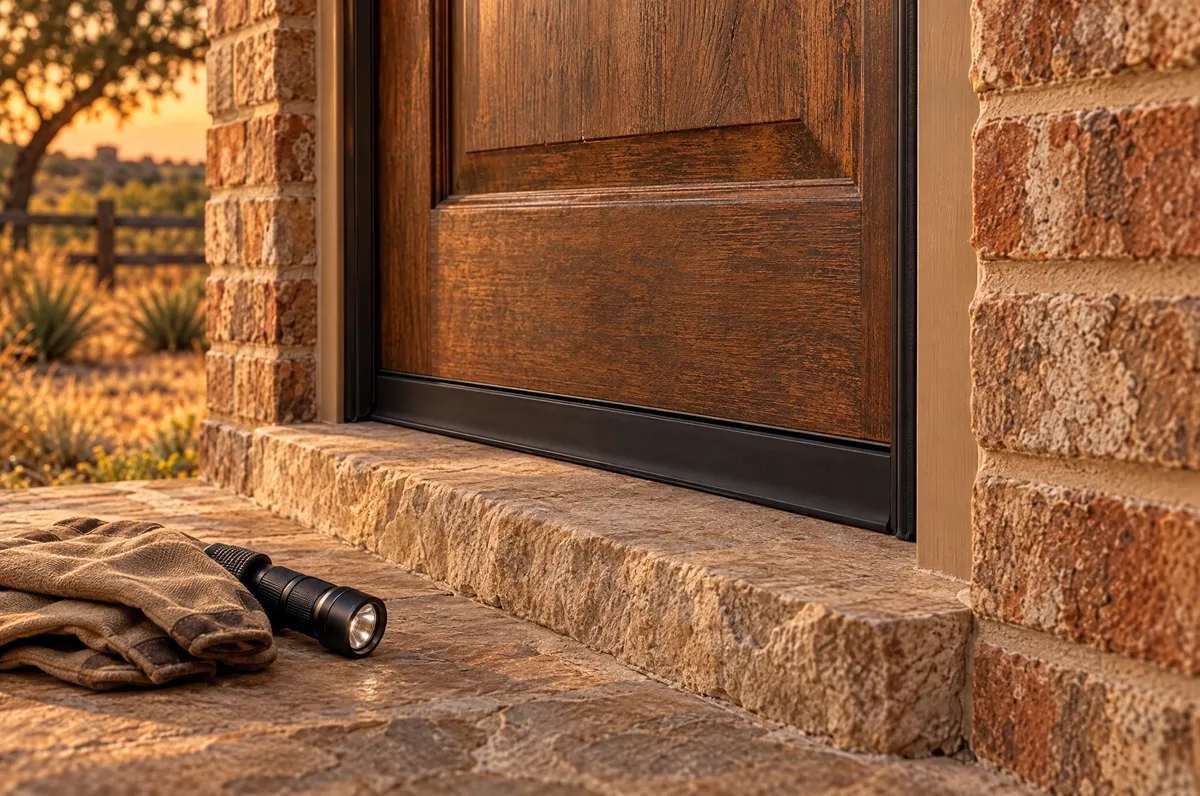
- Fix the doors first. Install tight-fitting door sweeps and thresholds on all exterior doors. A simple test from the school IPM plan: stand inside with the door closed, and if you can see daylight underneath, the gap is big enough to matter.
- Weatherstrip windows and doors. Install weather-stripping around loose-fitting doors and windows, and replace worn strips.
- Screen the weep holes, don't seal them shut. Texas A&M suggests plugging weep holes with copper mesh, pieces of nylon scouring pad, small squares of screen wire or steel wool. Steel wool rusts when wet, so it should only be used on dark-colored facades. The school plan recommends air-permeable screening so walls can still breathe and drain.
- Caulk the cracks. Use sealant around roof eaves, pipes and any other cracks into the structure. The school plan flags gaps of 1/8 inch or larger under roofline flashing.
- Keep screens tight. Window screens should be in good repair and fit snugly in their frames.
Clear the hideouts: what yard changes help?
Sealing works best when there's less shelter and food outside the walls. Texas A&M's management list includes:
- Remove trash, logs, boards, stones, bricks and other objects from around the house.
- Keep grass closely mowed near the house.
- Prune bushes and overhanging tree branches away from the structure.
- Store garbage containers in a frame that keeps them off the ground.
- Never bring firewood inside unless it is going straight onto the fire.
The school IPM plan adds removing mulch, loose stones and construction materials near buildings and replacing deteriorated mortar in brick and stone walls.
Rethink the porch lights
Because outdoor lights pull in insects, they also set the table for scorpions. Crickets are a good example. Texas A&M AgriLife notes that field crickets swarm in late summer and early fall and congregate around brightly lit buildings, and recommends turning off unneeded lights and using bulbs less attractive to insects. Fewer insects at the door means less reason for a hunter to linger. See the crickets profile.
Read the tracks: how can you find where scorpions are getting in?
Two tools from Texas A&M's playbook make the search easier:
- Sticky traps. Sticky monitoring traps readily catch scorpions and can be used to identify entry points. Place them along walls near doors, in the garage and in the attic, and note which ones catch.
- A UV black light after dark. Scorpions glow under ultraviolet light. Walking the foundation, fences and woodpiles at night with a UV flashlight can show where they gather.
Wear closed-toe shoes and gloves when moving debris or checking traps.
Do pesticides keep scorpions out?
Not on their own. Texas A&M is clear that scorpions are difficult to control with insecticides alone, and that the first strategy is to change the area around the structure. The school IPM plan likewise says pesticides should not be the sole control method.
When products are used, Texas A&M describes perimeter applications around the foundation and entry points, with indoor treatments limited to entry points, cracks and crevices. Ingredients you may encounter on scorpion product labels include synthetic pyrethroids such as bifenthrin, cyfluthrin and lambda-cyhalothrin, and naturally derived ingredients such as plant oils and pyrethrum, which Texas A&M notes generally break down faster. Whatever you consider, the label is the law. It must list scorpions and the site you plan to treat. Our guide on how to read a pesticide label walks through it.
What if someone gets stung?
Texas A&M notes that stings from Texas scorpions produce only moderate reactions in most people, but reactions vary and allergic reactions are possible. Watch the person closely. An ice pack can ease pain. Call Poison Control at 1-800-222-1222 for guidance, and seek immediate medical attention if swelling or pain persists, or if there is any difficulty breathing. Young children and people with allergies deserve extra caution.
For a year-round view of when scorpions and their prey are most active, see our DFW pest seasons guide.
When to get help
If you keep finding scorpions indoors after sealing doors, screens and weep holes, a licensed pest professional can inspect the attic, roofline and wall voids you can't easily reach. In Texas, structural pest control licenses are issued by the Texas Department of Agriculture's Structural Pest Control Service. For any sting with breathing trouble or a severe reaction, call 911.
This field guide is educational and does not offer treatment bookings.
Common questions
Are striped bark scorpions dangerous?
Texas A&M says stings from Texas scorpions cause only moderate reactions in most people, but allergic reactions are possible. Call Poison Control at 1-800-222-1222 for guidance and seek care for breathing trouble or persistent pain or swelling.
Why do I find scorpions indoors at night?
Scorpions hide by day and hunt at night, so indoor sightings often happen after dark. Finding them inside is a sign to check door gaps, weep holes and other entry points.
Should I seal weep holes completely?
No. Weep holes let brick walls drain and breathe. Texas A&M suggests plugging them with mesh, screen wire or similar material that blocks scorpions but still lets air through.
How can I tell where scorpions are getting in?
Place sticky traps along walls near doors, in the garage and in the attic, and see which ones catch. A UV flashlight after dark also makes scorpions glow.
Will a perimeter spray solve the problem?
Not by itself. Texas A&M recommends changing the area around the home first. Any product used must list scorpions on its label, and the label must be followed exactly.
Sources
Suspects in this article
More field notes
- SeasonalA weather-dependent, season-by-season guide to the pests North Texas homeowners commonly see, with what to watch and what to do.
- SafetySignal words, EPA registration numbers, directions, gear, storage and first aid: how to read a pesticide label and protect kids and pets.
- Control basicsInspect, identify, prevent, monitor, treat and evaluate: a plain-English guide to Integrated Pest Management for DFW homes.
- PreventionA weekly dump-and-drain routine, West Nile context and CDC repellent guidance to cut mosquito breeding in DFW yards after rain.