Pest dossier · Insects
Field and house crickets
A light-attracted suspect. Tell fall field-cricket flights apart from indoor house crickets.
Last updated October 3, 2026
Cricket control starts with identification, reduced light attraction and sealed entry routes. Texas fall flights usually involve field crickets; house crickets can breed indoors and need a different assessment.
Know the suspect
Field crickets are dark brown to black; size varies by species. House crickets are yellowish brown, about 5/8 to 7/8 inch long, with three dark bands on top of the head. Both have long antennae and strong jumping legs. Around DFW homes and storefronts, inspect lighted entrances and garage thresholds. Doors, damaged screens and gaps near lights offer entry. University of Minnesota cricket identification University of Florida house-cricket identification
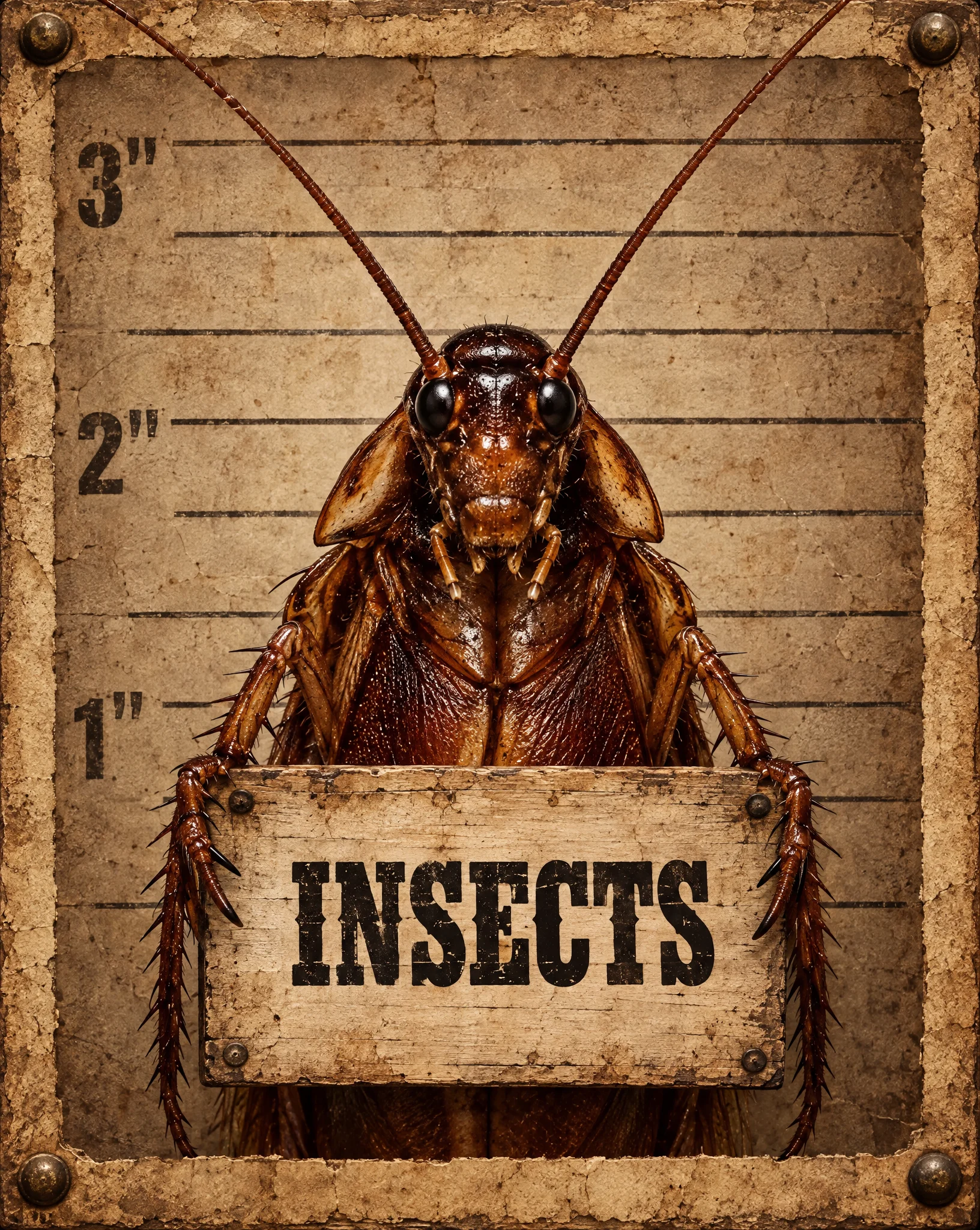
The wanted portrait is a stylized AI illustration, not an identification photograph. Compare the actual animal and its markings with an Extension identification guide.
What they can do
Crickets are usually a nuisance, with noise, staining and occasional fabric damage. Dead field crickets can accumulate and cause odor. Field crickets do not breed indoors, while house crickets can; repeated sightings are a reason to confirm the species, not evidence of disease transmission. Extension field-cricket biology Extension indoor-breeding distinction
Start with control, not a spray
- Turn off nonessential outdoor lights earlier while retaining needed safety lighting.
- Use less insect-attractive lighting where practical.
- Repair thresholds, garage-door gaps and damaged screens.
- Inspect soffit and window openings without blocking required drainage or ventilation.
- Reduce sheltered clutter and clean food spills.
- Vacuum occasional visitors, discard the contents promptly and remove accumulated dead crickets.
Exclusion and light management reduce repeated arrivals. Inspect stored fabrics and sheltered indoor spaces if confirmed house crickets persist; treating an outdoor flight and an indoor breeding source as the same problem may miss the cause. Texas A&M guidance University of Minnesota cricket habitat guidance
Chemicals you may encounter
Extension field-cricket guidance names hydramethylnon in baits and permethrin or bifenthrin among outdoor control ingredients. These are examples, not a house-cricket product recommendation or permission to spray a whole yard. Use only a current label covering the identified cricket and location. Indoor sprays are not recommended for accidental field-cricket visitors, and insecticides cannot overcome continued light attraction. Extension control limits
The label is the law. Use a product labeled for the actual pest and location, and follow its directions for placement, amounts, protective equipment and re-entry. Keep products and treated areas away from children and pets as the label directs. Never use an outdoor-only pesticide indoors or assume more product works better. EPA pesticide safety
Seasonal watch
Use late-summer and fall North Texas checks after rain and cooling weather to inspect lighted doorways and storefronts. Extension reports Texas flights often peak around August and September, but timing and intensity vary. That does not predict arrivals at one property, and recurring house crickets indoors warrant inspection in any season. Texas A&M guidance
When to get help
A qualified, licensed pest professional can assess persistent activity after entry repairs and lighting changes. Ask for identification and whether an indoor breeding source is present before accepting broad spraying as the answer. Do not assume every chirping insect is a field cricket.
This field guide is educational and does not offer treatment bookings.
Common treatments
Reduce night lighting, seal gaps and remove nearby shelter before considering a pesticide. Extension field-cricket guidance lists baits and outdoor treatments, but those examples are not universal house-cricket recommendations. Indoor sprays are not recommended for accidental field-cricket visitors. Use a current label for the identified cricket and site.
Ingredient references
These are examples discussed in pest guidance, not a shopping list. The exact product label must cover the pest, location and use. An ingredient name alone does not establish suitability or Texas registration.
Read the pesticide-label guide or browse the treatment catalog.
Common questions
Can crickets breed indoors?
House crickets can breed indoors; field crickets do not. Confirm the species when sightings recur.
What should I change first during a fall flight?
Reduce nonessential outdoor light attraction and repair entry gaps while retaining needed safety lighting.
Will more pesticide stop every arrival?
No. Insecticides cannot overcome continued light attraction, so exclusion and light management remain important.