Pest dossier · Insects
Fleas
A pet-linked suspect. Coordinate the animal, bedding and home rather than spraying alone.
Last updated October 3, 2026
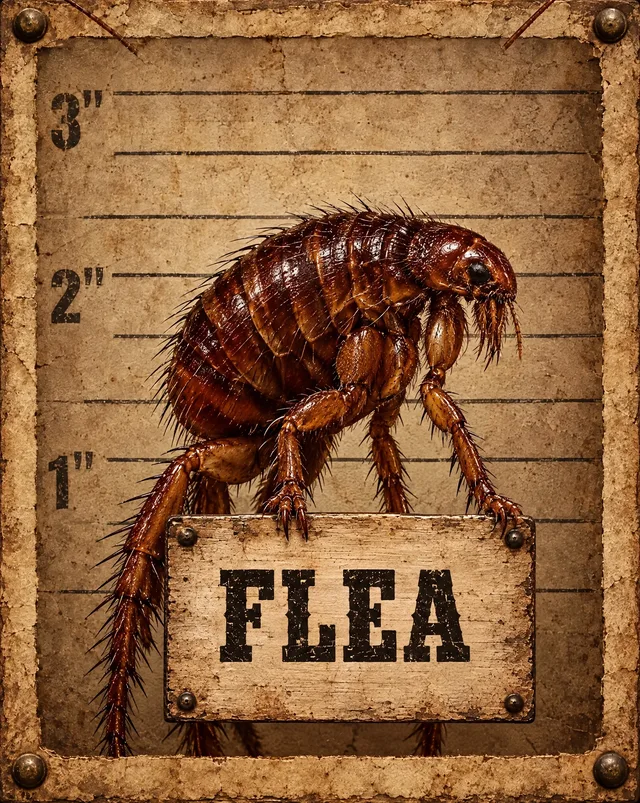
Flea control starts with sanitation and a coordinated plan for the pet and its resting areas. Treating the home while leaving an infested animal untreated can allow the problem to continue.
Know the suspect
Adult fleas are small, about 1/8 inch long, brown to black, wingless and equipped with strong jumping legs. Cat fleas feed on both cats and dogs. In DFW homes, check pets, bedding, rugs and furniture where animals rest; outdoors, inspect shaded pet-resting areas. Eggs drop from an infested animal into its surroundings, connecting pet and home activity. Texas A&M flea identification and biology
The wanted portrait is a stylized AI illustration, not an identification photograph. Compare the actual animal and its markings with an Extension identification guide.
What they can do
Fleas can bite people, although cat fleas do not live and reproduce on humans. Fleas can also be involved in disease transmission, including flea-borne typhus; a bite does not establish infection or which flea species was involved. Have illness assessed rather than diagnosing it from an itchy mark. Texas A&M guidance Extension biting-pest overview
Start with control, not a spray
- Inspect pets with a flea comb and arrange a veterinarian-guided plan.
- Vacuum rugs, furniture edges and areas where pets spend time.
- Dispose of vacuum contents promptly so developing fleas cannot return.
- Wash pet bedding and keep resting areas clean.
- Reduce debris and inspect shady outdoor areas used by pets.
- Keep monitoring after cleanup; protected pupae may emerge later.
Coordinate any needed premise treatment with the pet's veterinary care. Spraying every sunny part of the lawn misses the likely sheltered breeding sites. Cleaning helps, but follow-up is important because pupae can survive initial control measures. Texas A&M guidance
Chemicals you may encounter
Extension names methoprene and pyriproxifen in premise growth-regulator products. These are examples, not a recommendation to apply a household product to an animal. Pet and premise products have different labels; a veterinarian should choose suitable animal treatment. Natural or citrus-based products are not automatically harmless, particularly for cats. Extension flea-control options
The label is the law. Use a product labeled for the actual pest and location, and follow its directions for placement, amounts, protective equipment and re-entry. Keep products and treated areas away from children and pets as the label directs. Never use an outdoor-only pesticide indoors or assume more product works better. EPA pesticide safety
Seasonal watch
Use warm North Texas weather and increased pet activity as prompts to inspect coats and resting sites. Continue indoor monitoring outside those periods; sheltered life stages can remain after treatment. Follow evidence of activity and label directions rather than a fixed calendar for repeat applications. Texas A&M guidance
When to get help
A veterinarian is warranted for heavy or recurring fleas on a pet. A qualified, licensed pest professional can assess persistent activity in the home or sheltered yard. Seek a doctor for illness after flea exposure or a significant skin reaction, rather than assuming it is ordinary irritation. Texas A&M guidance
This field guide is educational and does not offer treatment bookings.
Common treatments
Combine vacuuming, laundering and veterinary pet care with treatment of identified problem areas when needed. Methoprene and pyriproxyfen are examples of growth regulators used in premise products for immature flea stages, not stand-alone adult knockdown. Pet products and household products have different labels. Let a veterinarian choose animal treatment; never assume a dog product is suitable for a cat.
Ingredient references
These are examples discussed in pest guidance, not a shopping list. The exact product label must cover the pest, location and use. An ingredient name alone does not establish suitability or Texas registration.
Read the pesticide-label guide or browse the treatment catalog.
Common questions
Can cat fleas feed on dogs?
Yes. Cat fleas feed on both cats and dogs.
Should home and pet control be coordinated?
Yes. Coordinate any needed premise treatment with the pet's veterinary care; an untreated infested animal can allow the problem to continue.
Why can fleas return after initial control?
Protected pupae can survive initial control measures and emerge later, so follow-up and monitoring are important.