Pest dossier · Insects
Bed bugs
A hitchhiking suspect. Inspect travel gear and sleeping areas; sprays alone miss the job.
Last updated October 3, 2026
Bed bug control starts with confirming the pest, inspecting sleeping areas and coordinating follow-up. Sprays alone often fail because bugs hide in protected cracks and many tolerate commonly used insecticides.
Know the suspect
Bed bugs are flat, wingless and reddish brown, with life stages roughly 1 to 7 mm long. Look around mattress seams, bed frames and sofas where people rest. They hitchhike in luggage, clothing and furniture, including secondhand items brought into DFW homes. Shed skins and rusty blood spots are clues; bites alone are not reliable identification. CDC bed bug identification and spread
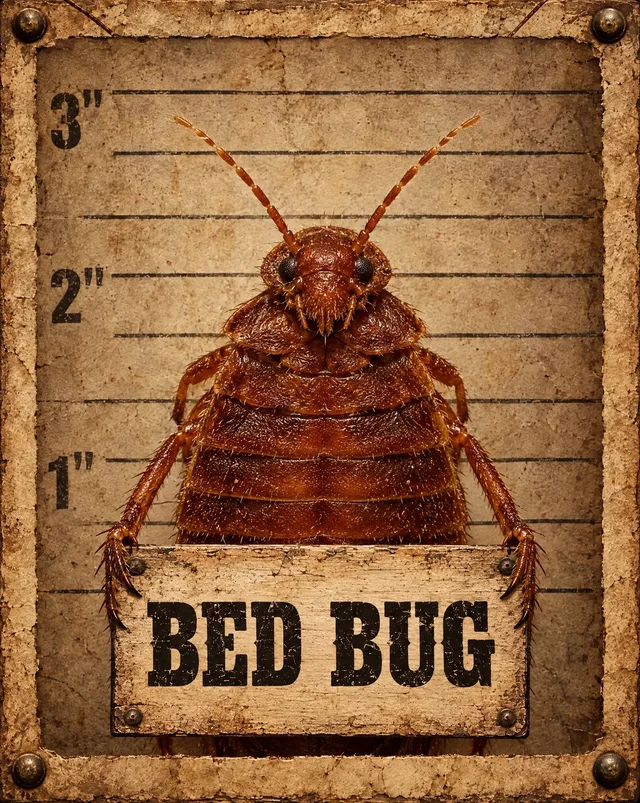
The wanted portrait is a stylized AI illustration, not an identification photograph. Compare the actual animal and its markings with an Extension identification guide.
What they can do
Bed bugs are not known to spread diseases to people. Bites can cause itching, sleep loss and, rarely, allergic reactions; scratching may lead to secondary infection. Cleanliness does not determine whether a home has bed bugs, and skin marks alone do not diagnose their presence. Texas A&M guidance
Start with control, not a spray
- Inspect travel bags and secondhand furniture before placing them near sleeping areas.
- Reduce clutter while keeping suspect items contained, not carried between rooms.
- Bag bedding before moving it; use fabric-safe laundering and heat-drying guidance.
- Use purpose-made mattress and box-spring encasements where appropriate.
- Place bed-leg interceptors and keep bedding from bridging to walls or the floor.
- Vacuum accessible bugs and promptly bag and discard the vacuum contents outdoors.
Vacuuming does not reliably remove eggs or every hiding bug. In attached housing, notify the property manager so inspection can include nearby units; simply moving to another sleeping room can spread the problem. Extension bed bug control guidance
Chemicals you may encounter
Extension discusses silica aerogel and diatomaceous earth in insect-control dusts. These are examples, not instructions to scatter powder on a bed; pool-filter diatomaceous earth is not an insect-control substitute. Avoid inhaling dust. Foggers miss protected hiding places, and resistance can limit pyrethroid sprays. Never use household pest spray on a person or pet. Texas A&M guidance
The label is the law. Use a product labeled for the actual pest and location, and follow its directions for placement, amounts, protective equipment and re-entry. Keep products and treated areas away from children and pets as the label directs. Never use an outdoor-only pesticide indoors or assume more product works better. EPA pesticide safety
Seasonal watch
Use North Texas travel, guest visits and incoming furniture as inspection prompts in any season. Bed bugs live around sleeping areas, so winter does not remove the need for monitoring. This is an introduction-and-inspection prompt, not a claim of a local monthly outbreak. Texas A&M guidance
When to get help
A confirmed infestation warrants help from a qualified, licensed pest professional with bed bug experience, especially across several rooms or attached units. Ask for inspection and follow-up, not a spray-only promise. A doctor can assess significant skin reactions or signs of infection. Texas A&M guidance
This field guide is educational and does not offer treatment bookings.
Common treatments
Confirm identification and combine inspection, monitoring and appropriate physical control with a qualified treatment plan. Insect-control desiccant dusts and labeled insecticides are examples, not instructions to scatter powder on bedding. Avoid inhaling dust. Pool-filter material is not a pesticide substitute, and resistance can limit some insecticides. Foggers can miss protected hiding places.
Ingredient references
These are examples discussed in pest guidance, not a shopping list. The exact product label must cover the pest, location and use. An ingredient name alone does not establish suitability or Texas registration.
Read the pesticide-label guide or browse the treatment catalog.
Common questions
Do bed bugs spread disease?
Bed bugs are not known to spread diseases to people, but bites can cause itching, sleep loss and allergic reactions.
Are bites enough to identify them?
No. Bites alone are not reliable identification. Inspect sleeping areas for bugs, shed skins and rusty blood spots.
Why are sprays alone inadequate?
Bugs hide in protected cracks, foggers miss hiding places and resistance can limit commonly used sprays.