Field notes · Prevention
Bed bug travel checklist: inspect, contain, unpack
Check the hotel bed and headboard, keep bags off the bed, report signs, and heat-dry clothes when you get home.
Updated October 3, 2026 · 5 min read
The short version
- Bed bugs travel in luggage, clothing and furniture and can survive long periods without feeding.
- In hotels, check mattress seams, tags, the box spring and especially the headboard before unpacking.
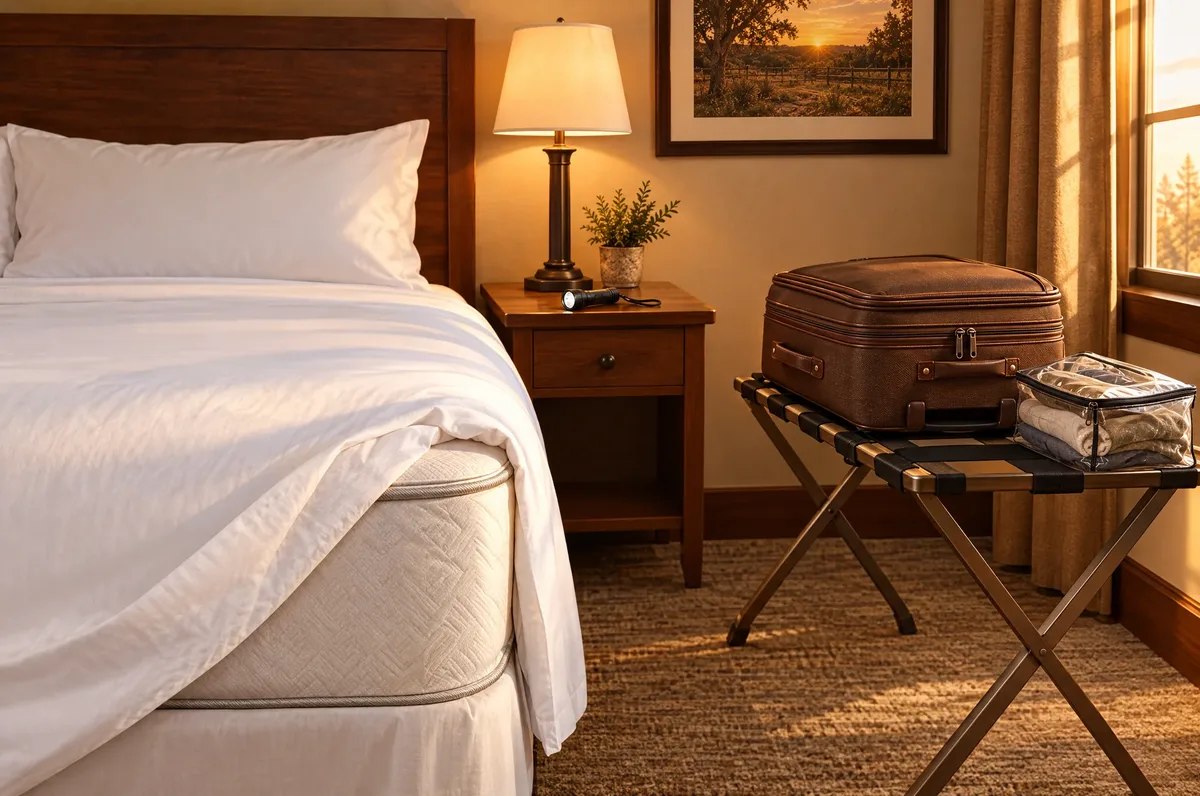
- Keep luggage on a luggage rack or in the bathtub, never on the bed or floor.
- Report suspected bed bugs to hotel management as soon as you see them.
- High dryer heat kills bed bugs, while washing alone generally does not; Texas A&M advises at least 30 minutes on high.
- Store suitcases in a garage or basement, never under the bed.
To avoid bringing bed bugs home, inspect the bed and headboard before you unpack, keep your luggage on a rack or in the bathtub and off the bed and floor, and report any signs to hotel management right away. When you get home, unpack straight into the laundry and run clothes through a hot dryer. Washing alone generally won't kill bed bugs. Keep your suitcases out of the bedroom.
Why are bed bugs a travel problem?
Bed bugs are expert hitchhikers. The EPA's home prevention page notes that they travel in furniture, luggage and clothing and can survive long periods without feeding. Texas A&M AgriLife urban entomologist Dr. Mike Merchant, quoted in AgriLife Today, says it only takes one traveler with bed bugs in their luggage to infest a hotel. DFW is a major travel hub, and the same habits apply whether you're flying out of DFW or Love Field or driving to a lake cabin.
Know the suspect: what do bed bugs and their signs look like?
Texas A&M's bed bug action plan describes adults as small (1/16 to 3/16 inch), flattened, reddish-brown insects that hide in cracks during the day and come out at night to feed. The EPA's guide to finding bed bugs lists the signs to look for:
- Rusty or reddish stains on sheets or mattresses from crushed bugs.
- Dark spots about the size of a pencil point. This is excrement, and it may bleed into fabric like a marker.
- Eggs, eggshells and shed skins. Eggs are tiny (about 1 mm) and pale yellow.
- Live bugs.
Don't rely on bites. The EPA notes that bed bug bites can look like other insect bites, rashes or hives, and some people don't react at all. See our bed bug profile for more on identification. The illustrations on this site are drawings, not identification photographs.
Read the tracks: how do I inspect a hotel room?
Do this before you unpack. A flashlight helps, and your phone's light will do.
- Park the bags first. Leave luggage in the bathroom or on a hard surface away from the bed while you inspect.
- Pull back the bedding. Texas A&M entomologist Wizzie Brown, in AgriLife Today, advises checking the mattress and box spring, especially near the seams and tags and along the bottom of the box spring.
- Check the headboard. Merchant explains that bed bugs avoid living directly on beds because linens get changed, but "the headboard and frame never get moved, so they will persist there."
- Check upholstered furniture and edges. Brown also lists cushions, the backs of picture frames, baseboards and the backs of electrical switch plates.
- Inspect the luggage rack. The EPA's travel tips say to check it before you use it.
Where should I put my luggage in a hotel?
Keep it up and away from where bed bugs hide:
- Use the luggage rack. The EPA recommends packing and unpacking on a luggage rack rather than on the bed or floor, and keeping luggage away from the bed.
- Or use the bathtub. Brown notes in AgriLife Today that a bathtub's smooth sides are hard for bed bugs to climb.
- Keep personal items off beds and upholstered furniture. Merchant recommends keeping suitcases and personal items on clean luggage racks, away from beds and upholstered furniture.
- Live out of the suitcase. Keep clothes zipped in your bag instead of spreading them around the room.
What should I do if I find bed bugs at a hotel?
- Report it right away. Merchant advises reporting suspected bed bugs to hotel management as soon as you see them (AgriLife Today).
- Don't unpack further. Keep luggage zipped and on a hard surface or in the tub.
- Contain what may be exposed. Texas A&M's action plan notes that lidded plastic tubs with smooth sides, or plastic garbage bags tied shut, are effective at holding bed bugs in. Bag clothes you've worn or unpacked.
- Plan to heat-treat at home. Follow the laundry steps below as soon as you arrive.
- For bites, see a healthcare provider if you're concerned. This guide can't diagnose a rash or a bite.
How do I unpack at home without bringing bed bugs inside?
Make your return a routine.
- Unpack in the garage or utility room, not the bedroom. Merchant advises keeping luggage out of the living and sleeping areas (AgriLife Today).
- Go straight to the laundry. The EPA says to unpack directly into a washing machine.
- Inspect the suitcase. Check the seams, pockets and wheel wells with a flashlight for the signs listed above.
- Store suitcases away from bedrooms. The EPA suggests a basement or garage and says never to store suitcases under your bed.
How hot and how long should I run the laundry?
Heat from the dryer is what does the work. The EPA says time in a dryer on high heat kills bed bugs, and that washing alone generally won't. Texas A&M sources give specific times:
- Merchant (AgriLife Today): thirty minutes of high-temperature washing followed by at least 30 minutes of high-temperature drying should take care of any bed bugs that came home in your suitcase.
- Texas A&M school bed bug plan (action plan): dry clothing on high heat for at least 30 minutes.
For items that can't go through a washer, follow the care label and put them in the dryer if they can handle the heat. The EPA's home prevention page adds that at a shared laundry, you should carry items in plastic bags, move them from the dryer straight into a bag, and fold them at home.
How else can I bed-bug-proof my home?
Travel isn't the only way bed bugs get in. The EPA's home prevention page suggests a few habits that also make an early problem easier to spot:
- Check secondhand furniture, beds and couches for signs of bed bugs before you bring them home.
- Use a protective mattress encasement. Light-colored encasements make bugs easier to see.
- Cut clutter so there are fewer places to hide.
- Vacuum regularly to pick up any hitchhikers.
- In apartments and duplexes, install door sweeps and seal cracks around baseboards and outlets to slow bugs moving between units.
The checklist
Before you unpack
- Leave luggage in the bathroom or tub.
- Pull back the bedding and check seams, tags and the box spring.
- Check the headboard, cushions and luggage rack.
During your stay 4. Keep luggage on the rack or in the tub, never on the bed. 5. Keep clothes zipped in the suitcase. 6. Report any signs to management right away.
At home 7. Unpack outside the bedroom. 8. Wash, then dry on high heat for at least 30 minutes. 9. Inspect the suitcase, then store it away from bedrooms.
When to get help
If you find signs of bed bugs at home after a trip, don't panic, and don't grab a fogger. Read our bed bug profile and the EPA's bed bug guidance, and contain clutter in sealed bags. Bed bugs are hard to eliminate, so a licensed pest professional can help. Any product you use must be applied exactly as its label directs; see how to read a pesticide label. For bite reactions, talk to a healthcare provider.
This field guide is educational and does not offer treatment bookings.
Common questions
Is washing clothes enough to kill bed bugs?
Generally not. The EPA says dryer heat is what kills them, and Texas A&M sources advise at least 30 minutes on high heat.
Can I tell bed bugs from their bites?
No. The EPA notes bed bug bites can look like other bites or rashes, and some people don't react at all. Look for bugs, dark spots, stains, eggs and shed skins instead.
Why check the headboard and not just the sheets?
Linens get changed often, but headboards and frames stay put, so bed bugs tend to settle there. Texas A&M entomologists single it out as a key hiding spot.
Where should I keep my suitcase in a hotel?
On a luggage rack you've checked, or in the bathtub, whose smooth sides are hard for bed bugs to climb. Keep it away from the bed and upholstered furniture.
Should I use a bug bomb if I think I brought bed bugs home?
Don't reach for a fogger first. Contain items in sealed bags, heat-dry what you can, and use the EPA's bed bug guidance or a licensed professional to plan the next steps.
Sources
Suspects in this article
More field notes
- Control basicsInspect, identify, prevent, monitor, treat and evaluate: a plain-English guide to Integrated Pest Management for DFW homes.
- SafetySignal words, EPA registration numbers, directions, gear, storage and first aid: how to read a pesticide label and protect kids and pets.
- PreventionStriped bark scorpions climb, hide in cracks and follow insects indoors. Sealing doors, weep holes and gaps keeps most of them out.
- PreventionA weekly dump-and-drain routine, West Nile context and CDC repellent guidance to cut mosquito breeding in DFW yards after rain.