Pest dossier · Insects
Mosquitoes
A standing-water suspect. Drain breeding sites and follow local West Nile guidance.
Last updated October 3, 2026
Mosquito control starts with finding and removing standing water, then preventing bites. A yard spray does not replace screens, personal protection or current guidance from the local mosquito program.
Know the suspect
Mosquitoes are small, slender flies with long legs and a feeding proboscis; appearance and size vary by species. Some container-breeding Aedes have black-and-white markings, while the southern house mosquito is important to Dallas County West Nile prevention. Around DFW homes, inspect pots, buckets, gutters and other water holders. Adults can enter through damaged screens or open doors; do not identify disease risk from color alone. Dallas County mosquito prevention Extension identification and habitat guidance
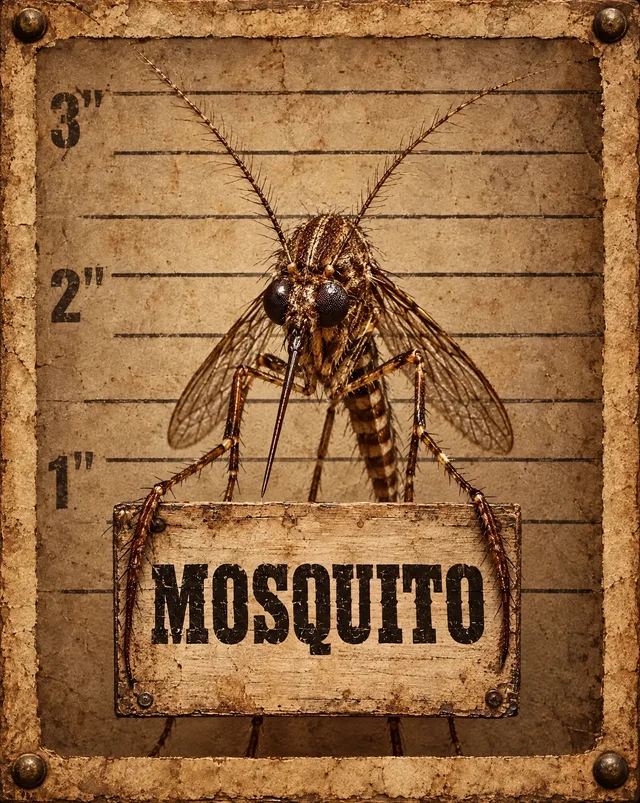
The wanted portrait is a stylized AI illustration, not an identification photograph. Compare the actual animal and its markings with an Extension identification guide.
What they can do
Infected mosquitoes can transmit West Nile virus. A mosquito bite does not establish infection, and a yard sighting cannot indicate which insects carry the virus. Use public-health information rather than guessing from bite marks. Dallas County West Nile guidance
Start with control, not a spray
- Empty, cover or turn over containers that collect rain or irrigation water.
- Clean gutters and maintain birdbaths and water features.
- Repair window and door screens.
- Wear long, loose clothing when practical and limit exposure at dusk and dawn.
- Recheck the yard after rain; mosquitoes can arrive from nearby properties even after your cleanup.
The county also advises labeled personal repellents. Biting times vary by species, so dusk-and-dawn caution does not replace protection during other outdoor activity. Texas A&M guidance
Chemicals you may encounter
Extension names Bacillus thuringiensis israelensis (Bti) and methoprene as larvicide examples for water that cannot be drained. These are examples, not permission to treat any pond, drain or public waterway. Larvicides target developing mosquitoes, not adults already flying. Broad sprays can harm pollinators and other beneficial insects. Extension backyard mosquito guidance
The label is the law. Use a product labeled for the actual pest and location, and follow its directions for placement, amounts, protective equipment and re-entry. Keep products and treated areas away from children and pets as the label directs. Never use an outdoor-only pesticide indoors or assume more product works better. EPA pesticide safety
Seasonal watch
Use warm-season North Texas weather, rainfall and irrigation as prompts to inspect water holders. Check the local county mosquito program for current West Nile advisories; this page does not claim an active alert or current case count. Risk and activity can change, so do not rely on a fixed seasonal start or stop. Texas A&M guidance
When to get help
A qualified, licensed pest professional can assess persistent breeding or adult activity after source reduction. Ask about the breeding source and exposure to non-target insects. Seek a doctor for illness after mosquito exposure; severe symptoms such as confusion or neck stiffness need prompt medical attention. Texas A&M guidance
This field guide is educational and does not offer treatment bookings.
Common treatments
Empty and scrub water-holding containers and repair screens first. Bti and methoprene are examples in larvicide guidance for water that cannot be removed. Larvicides act on developing mosquitoes, not biting adults already flying. The exact label must permit the water site; do not assume you can treat a pond, drain or public waterway. Use an EPA-registered personal repellent for bite prevention.
Ingredient references
These are examples discussed in pest guidance, not a shopping list. The exact product label must cover the pest, location and use. An ingredient name alone does not establish suitability or Texas registration.
Read the pesticide-label guide or browse the treatment catalog.
Common questions
Does a bite prove West Nile infection?
No. A mosquito bite does not establish infection, and a yard sighting cannot indicate which insects carry the virus.
What should I do after rain?
Recheck containers, gutters and other water holders; empty, cover or turn over containers that collect water.
Do larvicides kill flying adults?
No. Larvicides target developing mosquitoes, not adults already flying.
Field notes on this suspect
- Field notes · SeasonalA weather-dependent, season-by-season guide to the pests North Texas homeowners commonly see, with what to watch and what to do.
- Field notes · PreventionA weekly dump-and-drain routine, West Nile context and CDC repellent guidance to cut mosquito breeding in DFW yards after rain.
- Field notes · PreventionCut shade and debris in the yard, vacuum and wash pet bedding, check pets for ticks daily, and ask your vet about on-animal products.