Field notes · Seasonal
Fall rodent-proofing checklist for Texas homes
Seal quarter-inch gaps, remove food and shelter, and clean droppings the CDC way before mice and rats move in for the cooler months.
Updated October 3, 2026 · 6 min read
The short version
- Mice can enter through a hole the size of a dime or a 1/4-inch crack, and rats through a quarter-sized hole or a 1/2-inch crack.
- Texas A&M AgriLife Extension recommends sealing any gap of 1/4 inch or larger with steel wool or expandable foam.
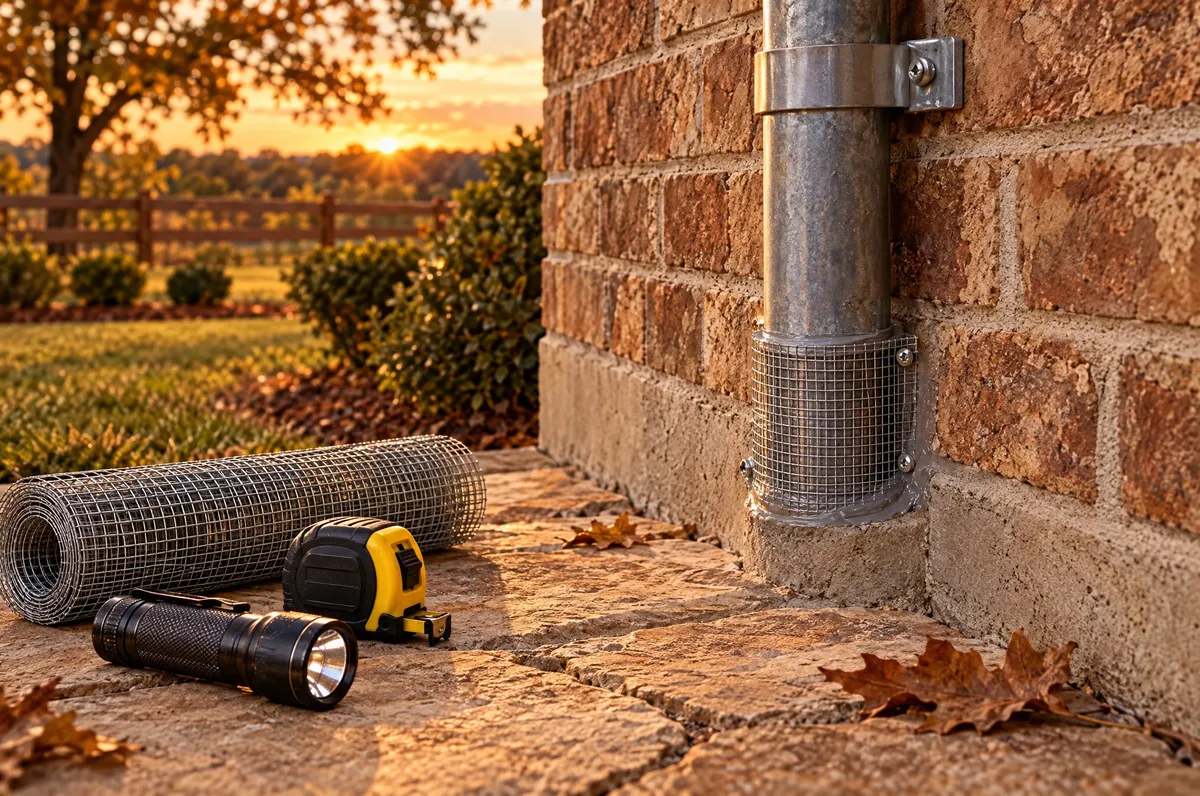
- The CDC recommends steel wool with caulk for small holes and hardware cloth, metal sheeting or cement for larger ones.
- AgriLife Extension recommends traps over poison baits and suggests locked box stations in homes with children or pets.
- The CDC warns never to sweep or vacuum rodent droppings, urine or nesting material because it can put viruses into the air.
- CDC cleanup calls for soaking droppings with a 1-to-9 bleach solution or EPA-registered disinfectant for 5 minutes before wiping.
Rodent-proofing a Texas home in fall comes down to three jobs: seal any gap a quarter inch or larger, take away the food and shelter that draw mice and rats close, and clean up droppings safely by wetting them with disinfectant instead of sweeping or vacuuming. Mice can squeeze through a gap the width of a pencil, so the small holes matter as much as the big ones.
Why do mice and rats move in when the weather cools?
Texas A&M AgriLife Extension experts say mice are an unwelcome guest people can expect to see more of as the weather turns colder. AgriLife's rodent IPM training, presented by a Dallas-based program specialist, notes that house mice live outside during summer, do not hibernate, and nest in warm areas close to food. Once one finds a way in, it tends to stay.
Mice also breed fast. The same AgriLife training advises taking action when you see or hear evidence of even one mouse.
Know the suspects
North Texas homes deal with three rodents that live alongside people. AgriLife's training calls them the three species of concern. The illustrations on this site are drawings, not identification photographs.
- House mouse. Small and curious. Needs only about a tenth of an ounce of food a day and does not need to drink water daily. House mice usually stay within 20 to 50 feet of their nest.
- Roof rat. A climber. AgriLife notes roof rats prefer mature vegetation, vines and trees, and most often nest above ground, which puts attics and rooflines at risk.
- Norway rat. Also called the sewer rat. A burrower that lives close to food and water. AgriLife notes crawl spaces can become infested if food trash collects along the outside of the foundation.
Read the tracks: signs of rodents
AgriLife lists these signs of rodent activity:
- Droppings and urine stains
- Gnaw marks and new holes
- Dark rub marks along walls and openings where rodents travel
- Nests
- Burrows (Norway rats)
- Scratching or scurrying noises, especially at night
- Pets alerting at a wall or cabinet
Rodents travel the same paths night after night and stay close to walls, according to AgriLife, and they are most active in the first two hours after dusk. Those wall edges are where to look for signs, and where traps go.
What size gap can a mouse or rat fit through?
This is the number that drives the whole checklist:
- Mice: a hole the size of a dime or a ¼-inch crack beneath a door, per AgriLife. The CDC puts it as a hole the width of a pencil, about ¼ inch.
- Rats: a hole the size of a quarter or a ½-inch crack beneath a door, per AgriLife.
AgriLife Extension recommends sealing any gap of ¼ inch or larger. If a pencil fits, a mouse can too.
The fall rodent-proofing checklist
Outside: walk the perimeter
Use the CDC's seal-up guide as your route. Check:
- The roofline. Rafters, gables, eaves and soffits. Roof rats climb, so these matter.
- Windows and doors. Look for daylight under exterior doors. AgriLife recommends door sweeps on exterior doors and sealing screen frames.
- The foundation. Check where the house meets the ground.
- Vents. Attic and crawl space vents.
- Utility openings. Holes where electrical, plumbing, cable and gas lines enter the house. AgriLife specifically calls out gaps around pipes and conduits.
Inside: check the hidden corners
The CDC lists these indoor spots:
- Inside and under kitchen cabinets and closets
- Around the fireplace
- Around pipes under sinks and washing machines, and pipes to the water heater and furnace
- Around air vents
- Attic, basement and crawl space
- Floor drains and the gap where floor meets wall
Seal it right
- Small holes: The CDC recommends filling them with steel wool and putting caulk around the steel wool to hold it in place, or using spray foam. AgriLife Extension also suggests steel wool or expandable foam sealant.
- Larger holes: Use lath screen or lath metal, cement, hardware cloth or metal sheeting, per the CDC.
Rodents gnaw constantly. AgriLife notes they can chew through wood, plastic, hoses, sheetrock, copper and wires, so check your repairs again after a few weeks.
Yard and storage: take away food and shelter
From the CDC and AgriLife:
- Store food and feed in sealed containers. The CDC recommends thick plastic or metal containers with tight lids for grains and animal feed. AgriLife recommends airtight containers for pet food.
- Cover the trash. Keep garbage cans tightly covered.
- Clear the walls. AgriLife recommends removing trash, weeds and wood from along exterior walls.
- Move woodpiles. The CDC suggests keeping woodpiles 100 feet or more from the house and raising wood at least a foot off the ground. On a small city lot, keep them as far from the house as you reasonably can.
- Trim vegetation. The CDC advises keeping grass and shrubs near the home well trimmed. Since roof rats favor vines and trees, AgriLife's notes make overgrown fence lines and branches near the roof worth a look too.
- Place compost away from the house. The CDC suggests at least 100 feet.
Should you use traps or poison?
Sealing and sanitation come first in an integrated pest management approach, and trapping comes next. AgriLife Extension recommends traps over poison baits. In the same AgriLife article, program specialist Janet Hurley says poison baits should be a last resort and are best left to professionals because of the risk to children and pets. If you have young children or pets, she suggests placing traps inside locked box stations.
A few trapping notes from AgriLife's training:
- More traps work better than a few, and they should be checked often.
- Placement is key. Set traps along the walls where rodents travel.
- Sealing entry points has to happen alongside trapping, or new rodents will keep arriving.
If you use any rodenticide, the label is the law. The EPA notes it is a violation of federal law to use a product in a manner inconsistent with its labeling. For a walkthrough of what a label tells you, see how to read a pesticide label. AgriLife's training adds that many rodenticides can harm pets and wildlife that eat the bait or a poisoned rodent; the National Pesticide Information Center can be reached at 1-800-858-7378.
How do you clean up rodent droppings safely?
Do not sweep or vacuum dry droppings, urine or nesting material. The CDC's cleanup guidance explains that sweeping or vacuuming can put tiny droplets containing viruses into the air, and that rodent-borne diseases spread to people mainly when they breathe in contaminated air. Hantavirus is one example; the CDC notes people get it from contact with rodent urine, droppings and saliva.
Follow the CDC's steps:
- Air it out. Open doors and windows for 30 minutes before cleaning, and leave the area while it ventilates.
- Glove up. Wear rubber or plastic gloves.
- Mix disinfectant. Use an EPA-registered disinfectant, or make a bleach solution of 1.5 cups of household bleach in 1 gallon of water (1 part bleach to 9 parts water).
- Soak it. Spray urine and droppings until very wet, then let them soak for 5 minutes or as long as the disinfectant label directs.
- Wipe, don't sweep. Pick up the wet material with paper towels and throw it in a covered garbage can.
- Disinfect the area. Mop or sponge the surrounding hard surfaces with disinfectant.
- Dead rodents and nests. Spray and soak them the same way, then double-bag them before disposal.
- Wash up. Wash gloved hands, take off the gloves, then wash bare hands with soap and warm water.
When to get help
Call in help when you find signs in several rooms, hear rodents in the attic or walls, or cannot find how they are getting in. In Texas, the Structural Pest Control Service of the Texas Department of Agriculture licenses applicators who work in and around structures, so look for a licensed pest professional. Large cleanups in closed spaces like attics and crawl spaces are worth handing off as well.
If a child or pet may have eaten rodent bait, call Poison Control at 1-800-222-1222 or your veterinarian right away. Hantavirus symptoms can start 1 to 8 weeks after contact with rodents and begin with fatigue, fever and muscle aches, according to the CDC. If that happens after a cleanup, see a doctor promptly and mention the rodent exposure.
This field guide is educational and does not offer treatment bookings.
Common questions
When should I rodent-proof my house in Texas?
Before cooler weather sets in. Texas A&M AgriLife Extension says mice become more common in homes as the weather gets colder, and house mice that live outside in summer do not hibernate.
Will expanding foam alone keep mice out?
Rodents gnaw through many materials, so the CDC pairs steel wool with caulk or spray foam for small holes and recommends metal, cement or hardware cloth for larger openings.
How do I tell a roof rat from a Norway rat?
Roof rats are climbers that favor trees and vines and usually nest above ground, often reaching attics. Norway rats are burrowers that live near ground level and can infest crawl spaces.
Why shouldn't I vacuum mouse droppings?
The CDC says sweeping or vacuuming can send tiny droplets containing viruses into the air, and rodent-borne diseases spread mainly through breathing contaminated air. Wet the droppings with disinfectant and wipe them up instead.
Are rodent poisons safe to use at home?
AgriLife Extension advises that poison baits should be a last resort and are best left to professionals because of risks to children and pets. Any rodenticide must be used exactly as its label directs.
Sources
Suspects in this article
- Dossier · RodentsSmall openings can mean big trouble. Start with exclusion, sanitation and careful trapping.
- Dossier · RodentsAn overhead suspect. Inspect roofline access, remove food and plan protected trapping.
- Dossier · RodentsA ground-level suspect. Check burrows, reduce rubbish and close accessible entry routes.
More field notes
- Control basicsInspect, identify, prevent, monitor, treat and evaluate: a plain-English guide to Integrated Pest Management for DFW homes.
- SafetySignal words, EPA registration numbers, directions, gear, storage and first aid: how to read a pesticide label and protect kids and pets.
- SeasonalA weather-dependent, season-by-season guide to the pests North Texas homeowners commonly see, with what to watch and what to do.